
"coffee cultivation Yemen"
1000 article(s) found

Fine single coffee Yemeni coffee beans
Yemeni Coffee Mocha is the earliest export port of Yemeni coffee beans, a well-known coffee named after a port in Yemen. The most familiar mocha coffee. When the word appears on the recipes of bags and cafes, the meaning is different. The former refers to the port where coffee beans are exported, while the latter refers to a kind of coffee. Strictly speaking, exported from the Yemeni port of Mocha
Current situation of coffee industry in Yemen
First, the history of Yemeni coffee (1) the origin of mocha coffee is in Yemen, the origin of mocha coffee is very wide, these coffees have their own characteristics and differences from quality to taste, but because these coffees have been shipped and exported from the port of Mocha in Yemen to markets around the world, they are collectively called mocha coffee. The port of Mocha is located along the Red Sea north of the Mande Strait.

Coffee cultivation in Yemen, country of origin of mocha coffee beans _ how much is a pack of mocha coffee beans
Professional coffee knowledge exchange more coffee bean information Please follow the coffee workshop (Wechat official account cafe_style) mentioned that the Yemeni mocha coffee beans immediately remind people of the magical sun-dried beans with thick and full taste, and the magical wild aroma like fermented tea is stacked on stacks, full of mystery, elusiveness and infinite longing like the country of Yemen. Yemen is located in Asia across the Red Sea and East Africa.

A brief introduction to the characteristics of coffee planting environment in Yemen is it suitable for coffee cultivation in Yemen
Professional coffee knowledge exchange more information about coffee beans please follow the coffee workshop (Wechat official account cafe_style) Yemen is one of the driest countries in the world. Economically, the country currently relies on oil exports for three-quarters of its income, but the World Bank predicts that the country's stocks will be used up around 2017. In a country that was once self-sufficient in farming, it now relies on imports for 80% of its crops
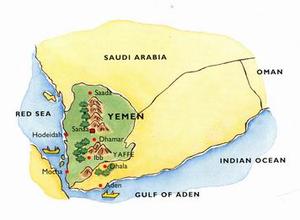
Details of coffee producing areas: the development status of coffee industry in Yemen
First, the history of Yemeni coffee (1) the origin of mocha coffee is in Yemen, the origin of mocha coffee is very wide, these coffees have their own characteristics and differences from quality to taste, but because these coffees have been shipped and exported from the port of Mocha in Yemen to markets around the world, they are collectively called mocha coffee. The port of Mocha is located along the Red Sea north of the Mande Strait.

A brief introduction to the cultivation of Yemeni boutique coffee beans with unique flavor, geographical location, climate and altitude
Yemeni coffee market: Yemeni coffee is exported from December to April of the following year. The problem in the past has been that coffee from the north was mixed with shoddy stuff before it was shipped from the southern port of Aden. Only coffee shipped from the port of Hodeida can be determined to come from the north. The vast majority of coffee in Yemen is grown under natural conditions, mainly

Development status of Mocha Coffee in Yemen
(1) the total output has continued to decline in recent years since 2001, and Yemeni coffee production has declined year by year due to various reasons. The annual output has dropped from 11906 tons in 2001 to 11608 tons in 2003, 11590 tons in 2004, to about 11000 tons in 2008. In recent years, despite the rising prices in the international coffee market, the coffee industry in Yemen has not boomed with it, but sharply.

Yemeni Mocha Coffee Yemen Mocha Brand introduces the flavor characteristics of Matali Mattari coffee
Professional coffee knowledge exchange more coffee bean information Please pay attention to Coffee Workshop (Wechat official account cafe_style) Yemen mocha Coffee (Yemen Mocha) Yemen is an ancient Arab country, Yemeni coffee from ancient times to the present, the whole process of cultivation and handling depends entirely on manual work, coffee beans are naturally dried in the sun, and the beans are small and strong.
Yemeni Coffee Origin introduces Yemeni Coffee aroma Yemeni Coffee Tree species
The country name of the coffee-producing area of Yemen with a long history: the land area of the Republic of Yemen: about 528000 square kilometers of the country population: about 25 million people Climate: most of the land of Yemen is very powerful during the day, cool at night, and there is a large temperature difference between day and night, but there are some exceptions. Coffee cultivation in Yemen has a long history, and Yemenis believe that coffee originated in Yemen. Because the port of Mocha

Compared with authentic Yemeni coffee brands, what do you recommend? what is the price of Yemeni mocha coffee?
Professional coffee knowledge exchange more coffee bean information please follow Coffee Workshop (Wechat official account cafe_style) Yemen Mocha Mattari Yemen Mocha Matali Yemen Mocha Mattari Yemen Moka Country country: Yemen Yemen Region Origin:: Matali Mattari Altitude altitude: 1300 '1900m Varietal varieties: Typic

A Summary of the Development History of Coffee in Yemen
Coffee scientific name: Coffea arabica), also known as coffee tree, Arabica coffee, etc., is the national flower of Yemen. Before the 6th century in the park, Yemen was called Arab, so the coffee trees transported from them to other places were also called Arabian coffee trees. The name coffee comes from the Arabic Qahwah, which means plant drink. Later, the coffee spread all over the world, and it was picked.

Why is coffee production scarce in Yemen? What are the reasons for Yemen's scarce coffee production?
Professional coffee knowledge exchange More coffee bean information Please pay attention to coffee workshop (Weixin Official Accounts cafe_style) Experts point out that if the trend of farmers abandoning coffee and planting cat grass does not improve, Yemen coffee will have no tomorrow. Experts concluded that drought and water shortage, lack of advanced irrigation systems, increased planting costs, serious diseases and insect pests, and easier import of coffee were the reasons for the unfavorable coffee crop.

Introduction to the characteristics and producing areas of mocha coffee beans in Yemen
Yemeni coffee is a variety classified as Arabica coffee. Yemen lies in the western part of the Arabian Peninsula. Coffee has been grown since ancient times, and Ethiopia is said to be the birthplace of Arabica coffee. The coffee produced in Yemen is called Mocha, named after the old port of Mocha in Yemen. It is also known as Mokha Matari. The characteristic of Yemeni coffee is that it has a strong floral aroma and
A Summary of the Development History of Coffee in Yemen
Coffee scientific name: Coffea arabica), also known as coffee tree, Arabica coffee, etc., is the national flower of Yemen. Before the 6th century in the park, Yemen was called Arab, so the coffee trees transported from them to other places were also called Arabian coffee trees. The name coffee comes from the Arabic Qahwah, which means plant drink. Later, the coffee spread all over the world, and it was picked.

What are the types of mocha coffee the difference between Yemeni mocha and Ethiopian Harald mocha
Professional coffee knowledge exchange more coffee bean information please pay attention to the coffee workshop (Wechat official account cafe_style) Yemen is located in the southwestern tip of the Arabian Peninsula, exports coffee every year, coffee planting area is also mocha coffee producing area. Mocha is located in a port city on the Red Sea coast of Yemen, hence the name Mocha Coffee. Coffee is one of Yemen's trade exports.

Yemeni Coffee Ancient Morning Coffee Mocha Coffee and Yemeni Coffee Origin History
Professional coffee knowledge exchange more coffee bean information Please follow the coffee workshop (Wechat official account cafe_style) the history of each country records its own culture and craftsmanship. For example, Japanese paper, Indian silk and Persian carpets. When it comes to Yemen, the most representative is coffee. In Yemen, there is nothing like the unique history of coffee trade and ancestral coffee cultivation skills.

Yemeni mocha coffee is the first country to mass-produce coffee as a crop.
Professional coffee knowledge exchange more coffee bean information please follow Coffee Workshop (Wechat official account cafe_style) the world's three major coffee growing areas: Africa, Indonesia and Central and South America. Yemen was the first country in the world to produce coffee as a crop on a large scale. The cultivation and treatment of mocha coffee in Yemen today is the same as that of hundreds of years ago.
Coffee development history of Yemeni coffee beans and some African countries
Yemeni coffee bean planting area is also very large, coffee beans occupy an important position in the national economy. Yemeni Matari 999 mocha coffee (Mattar 999) has a unique wild and strong flavor. Yemen, a rather poor region of the Arab countries, was formed in May 1990 by the merger of the Arab Republic of Yemen (Northern Yemen) and the Democratic people's Republic of Yemen (Southern Yemen). Yemenis are used to drinking tea.

Full-sun coffee producing country Yemeni coffee cultivation situation is Yemeni coffee high price Yemeni coffee is the most expensive
Professional coffee knowledge exchange more coffee bean information please follow coffee workshop (Wechat official account cafe_style) Yemeni coffee beans _ mocha coffee beans Yemeni mocha coffee beans each country's history records its own culture and craftsmanship. For example, Japanese paper, Indian silk and Persian carpets. When it comes to Yemen, the most representative is coffee. In Yemen, there is nothing

Yemeni Coffee characteristic Flavor Coffee cultivation introduction to the reasons why Yemeni coffee is expensive
Professional coffee knowledge exchange more information about coffee beans Please follow the coffee workshop (Wechat official account cafe_style) real Yemeni coffee is not common. After the fruit is ripe on the trees, the farmers harvest it by hand and dry it on the roof of the stone house built by the mountain. The process of shelling meat depends entirely on crude stone grinding equipment. Due to inconvenient transportation, coffee usually changes hands several times on the way.